Browse this collection and consult each publication for its evidence, sources and stated limitations.

ODA3-2026-10-INS-122
10 Nov 2026
India’s 2022 CERT-In Directions already covered specified AI/ML incidents. The 2026 AI auditing guidelines shift attention to risk-tier decisions, reporting evidence and tested controls.
Read publication →
ODA3-2026-10-INS-114
27 Oct 2026
A bounded method for connecting AI security requirements to runtime control evidence and incident records—without mistaking mappings for tested effectiveness.
Read publication →
ODA3-2026-10-INS-113
26 Oct 2026
A standards crosswalk shows what AI controls are mapped—not whether they work. Board-level questions, an agent authorization example, and a bounded evidence record for control effectiveness.
Read publication →
ODA3-2026-10-INS-112
23 Oct 2026
UK defence policy retains MOD accountability for AI assurance while suppliers may control key records. Buyers need proportionate, authorised ways to examine claims and record what remains unknown.
Read publication →
ODA3-2026-07-CHT-SEC-008
14 Jul 2026
Nine design principles for building enforceable security into AI systems before deployment.
Read publication →
ODA3-2026-07-CHT-SEC-007
13 Jul 2026
A practical method for proving that documented AI security controls operate as intended.
Read publication →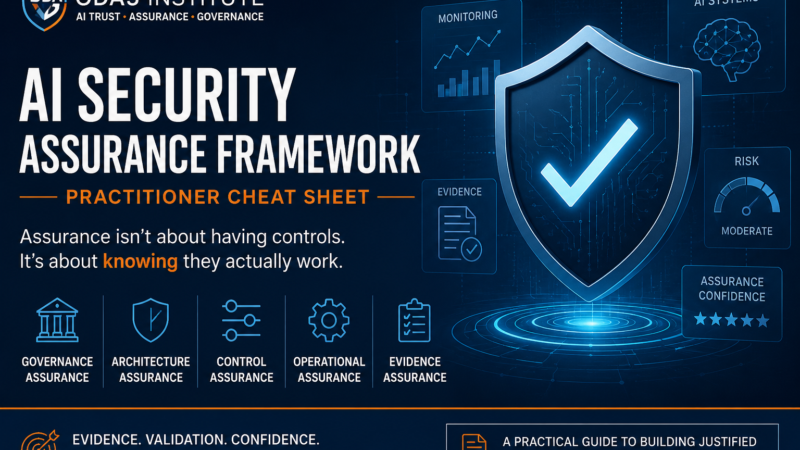
ODA3-2026-07-CHT-SEC-006
10 Jul 2026
A structured way to connect governance claims, operating controls, evidence, and bounded conclusions.
Read publication →
ODA3-2026-07-CHT-SEC-005
9 Jul 2026
Placing controls at the right layer across model, retrieval, agent, tool, and enterprise boundaries.
Read publication →
ODA3-2026-07-CHT-SEC-004
8 Jul 2026
A routing matrix for distinguishing harmful system behaviour from adversarial compromise and overlap.
Read publication →
ODA3-2026-07-TCR-SEC-004 / ODA3-2026-07-EXB-SEC-005
1 Jul 2026
Q2 evidence indicates that material AI security impact is shifting from model outputs toward authorized actions.
Read publication →