Browse this collection and consult each publication for its evidence, sources and stated limitations.

ODA3-2026-10-INS-114
27 Oct 2026
A bounded method for connecting AI security requirements to runtime control evidence and incident records—without mistaking mappings for tested effectiveness.
Read publication →
ODA3-2026-10-INS-113
26 Oct 2026
A standards crosswalk shows what AI controls are mapped—not whether they work. Board-level questions, an agent authorization example, and a bounded evidence record for control effectiveness.
Read publication →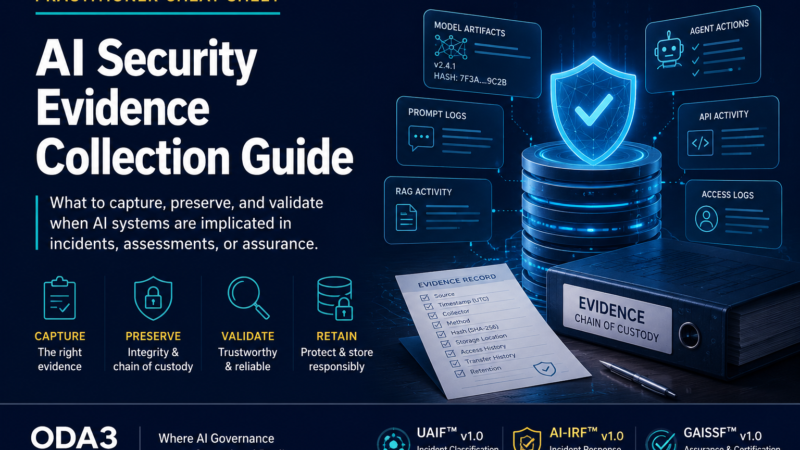
ODA3-2026-07-CHT-SEC-009
15 Jul 2026
Most organizations discover their AI evidence gaps mid-incident, mid-audit, or mid-assessment—when it is too late to recover what was never logged.
Read publication →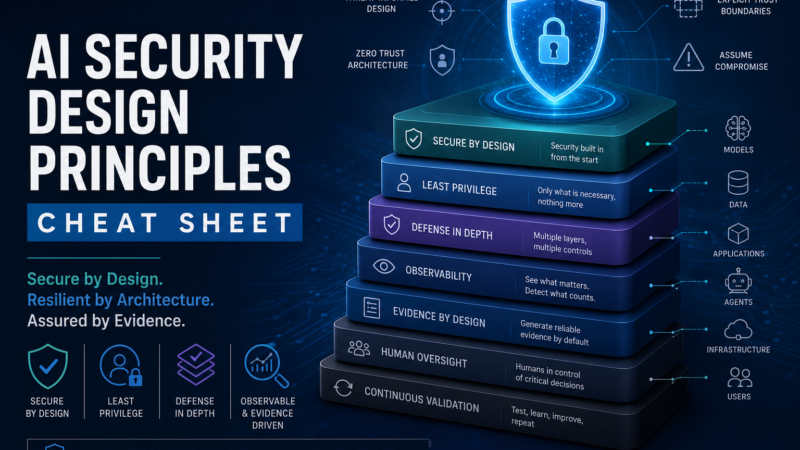
ODA3-2026-07-CHT-SEC-008
14 Jul 2026
Nine design principles for building enforceable security into AI systems before deployment.
Read publication →
ODA3-2026-07-CHT-SEC-007
13 Jul 2026
A practical method for proving that documented AI security controls operate as intended.
Read publication →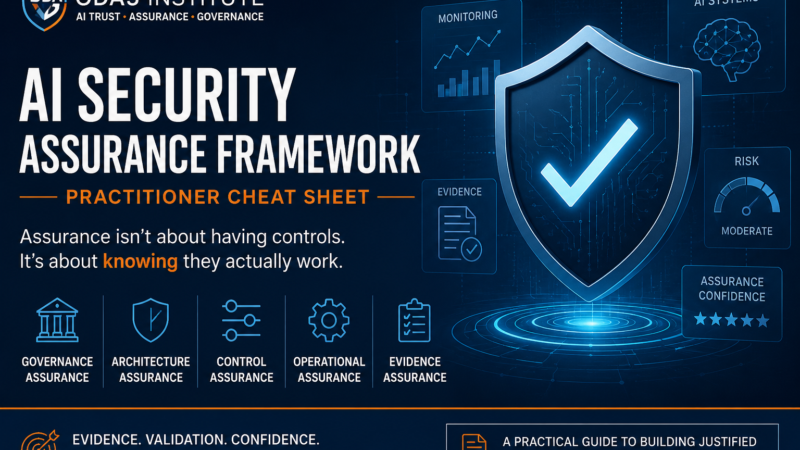
ODA3-2026-07-CHT-SEC-006
10 Jul 2026
A structured way to connect governance claims, operating controls, evidence, and bounded conclusions.
Read publication →
ODA3-2026-07-CHT-SEC-005
9 Jul 2026
Placing controls at the right layer across model, retrieval, agent, tool, and enterprise boundaries.
Read publication →
ODA3-2026-07-CHT-SEC-004
8 Jul 2026
A routing matrix for distinguishing harmful system behaviour from adversarial compromise and overlap.
Read publication →