

ODA3-2026-05-INS-020
Securing AI Development Tools Against Cyber Threats
The Gemini CLI RCE, Cursor code execution exposure, and VS Code Copilot injection risks just proved your AI coding assistant is an attack surface — not.
Read publication →INSIGHTS
Explore AI security, assurance evidence, incidents, regulatory implementation, standards and Physical AI. Read each publication with its sources, scope and limits.
THE ARCHIVE
Search the archive here. Open a publication from its result card, without visiting a second archive page.
Search published articles by title, publication ID or recorded category. Filter by document family or year, then open the published article from its result card.
Search results are retrieval matches, not evidence-tier judgments.
Open to read. A published article does not by itself establish an assessment or certification of a system.
127 matching publications.
ODA3-2026-05-INS-020
The Gemini CLI RCE, Cursor code execution exposure, and VS Code Copilot injection risks just proved your AI coding assistant is an attack surface — not.
Read publication →
ODA3-2026-05-INS-021
In the twelve months since the Model Context Protocol became the de facto interface layer for enterprise AI automation, the security posture of most.
Read publication →
ODA3-2026-05-INS-022
The National Institute of Standards and Technology just announced an AI-speci c Cybersecurity Framework pro le — plus predictive and agentic overlays..
Read publication →
ODA3-2026-05-INS-023
74 Days to EU AI Act Enforcement — Are Your Controls Ready? On 2 the amended EU AI Act timetable — 74 days from today — the EU AI Act’s…
Read publication →
ODA3-2026-05-INS-024
OWASP’s Q1 2026 exploit round-up and the emerging ASI Top 10 prove that real-world attack patterns now outnumber hypothetical risks.
Read publication →
ODA3-2026-05-INS-025
Nine Standards. Zero Interoperability. One August Deadline. When your organization faces an AI incident in the next 90 days — a model hallucination that.
Read publication →
ODA3-2026-05-INS-026
OpenAI’s “Trusted Access” framework + the EU AI Act Omnibus just rewrote the rules for frontier model governance. Target Audience: CISOs, AI governance.
Read publication →
ODA3-2026-05-INS-027
The incident that changed how security teams think about agentic AI did not involve an adversary. There was no attacker, no ex ltration payload, no.
Read publication →
ODA3-2026-05-INS-028
NIST’s shift toward threat-based CVE enrichment re ects a broader industry transition from static scoring to dynamic risk contextualization. Organizations.
Read publication →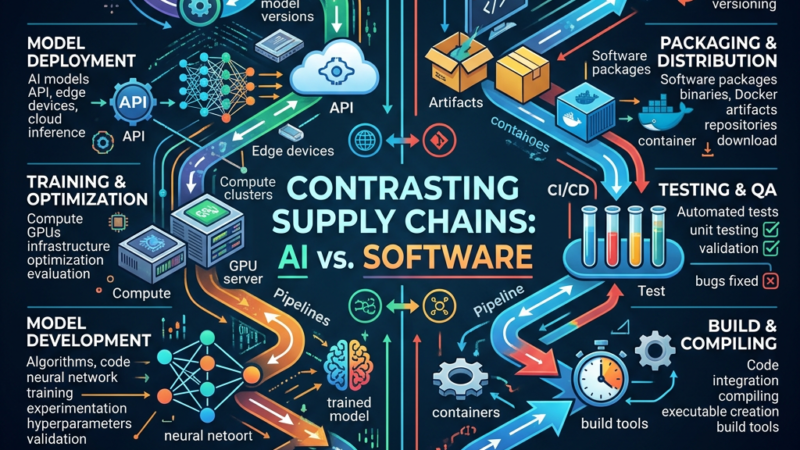
ODA3-2026-05-INS-029
Traditional Software Supply Chain Security Fails for AI In Q1 2026, AI dependency attacks surged 340% year-overyear. Your CVE scanners, static composition.
Read publication →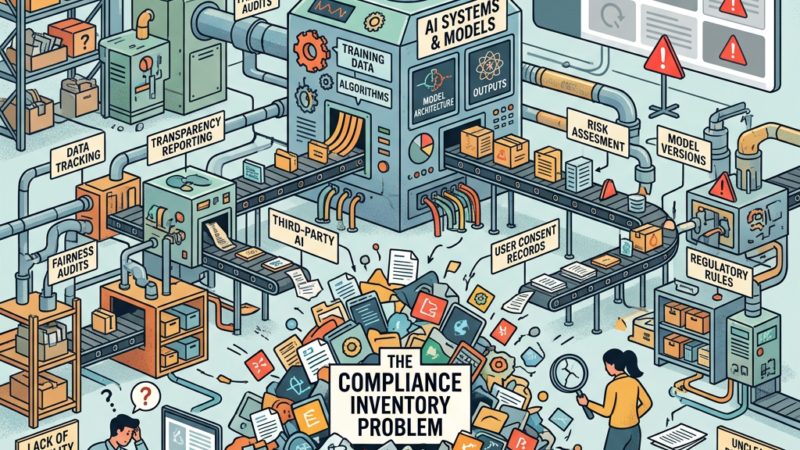
ODA3-2026-05-INS-030
Ask a CISO how many AI systems their organization operates and the most common answer is not a number — it is a pause. Then an estimate. Then a quali…
Read publication →
ODA3-2026-05-INS-031
Emerging discussions at the 2026 AI Security Summit highlight accelerating alignment between AI threat landscapes and international certi cation.
Read publication →READING PATHS
LEADERSHIP
Understand what a published analysis supports before using it in a decision or commissioning work.
Explore Publications →Commission a decision brief →PRACTITIONERS
Connect framework context with a defined operational question and the records needed to examine it.
Explore Frameworks →RESEARCHERS
Consult the controlling specification, supporting material and publication version.
Open documentation →PUBLICATION DISCIPLINE
Check the publication ID and date, the source basis, the claim being made and its limits. Read the recorded evidence cut-off where relevant.
What the cited record establishes, with its source and date.
What the analysis infers and the conditions on which that inference depends.
What was not observed, what remains unsupported and where evidence is missing.
Check corrections, withdrawal or supersession notices before relying on a publication. Use the authoritative version and retain the identity of the edition you consulted.
Publication and correction guidance →NOTABLY ABSENT
An ODA3 Institute article does not by itself certify, validate or secure a system. Each publication defines the evidence base and the limits of the claim it can support.
Commentary, reported events and proposed requirements should not be treated as an examination finding or an adopted obligation without the necessary basis.
Use the site’s publication feed to follow new posts. The feed provides publication updates, not continuous monitoring or system assurance.
Open the publication feed →