ODA3-2026-07-CHT-SEC-009
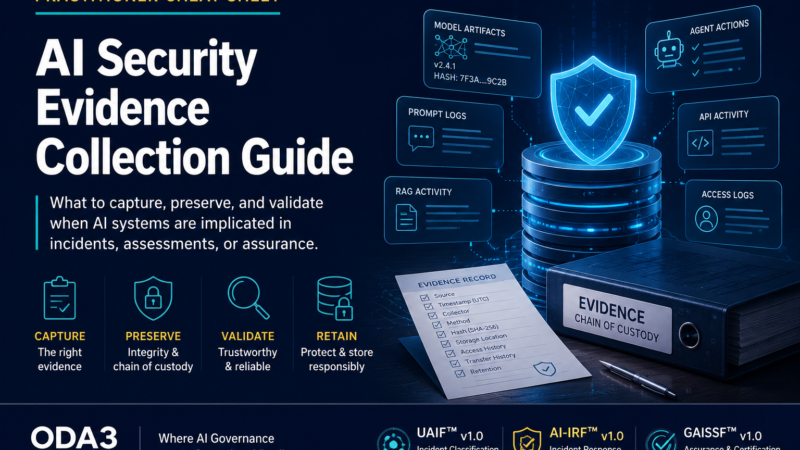
AI Security: Essential Evidence Collection Strategies
Most organizations discover their AI evidence gaps mid-incident, mid-audit, or mid-assessment—when it is too late to recover what was never logged.
Read publication →AI SECURITY RESEARCH · PRACTITIONER GUIDANCE
Published research, incident analysis, regulatory context and practitioner guidance. Each article should be read with its stated sources, scope and limits.
Open to read · Publication counts below reflect the published records currently available on this site.
Check the publication ID and date, the source basis, the claim being made and its limits. A published article does not by itself establish an assessment, certification or finding about a particular system. Corrections should remain visible and point to the current authoritative version.
PUBLICATIONS
The catalog includes the published WordPress records available on this site. Search matches titles, article text, publication IDs, tags and recorded evidence-basis fields. Category and year narrow the results; sort changes their order. A match is a retrieval result, not an endorsement or evidence-tier judgment.
ODA3-2026-07-CHT-SEC-009
Most organizations discover their AI evidence gaps mid-incident, mid-audit, or mid-assessment—when it is too late to recover what was never logged.
Read publication →ODA3-2026-07-CHT-SEC-008
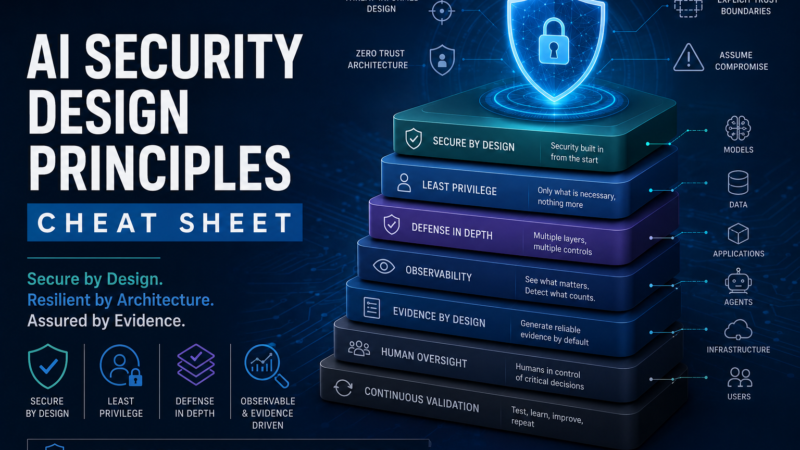
Nine design principles for building enforceable security into AI systems before deployment.
Read publication →ODA3-2026-07-CHT-SEC-007
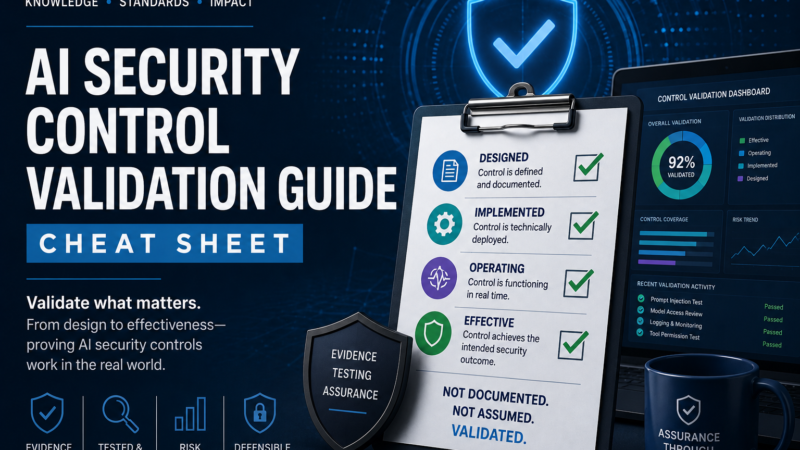
A practical method for proving that documented AI security controls operate as intended.
Read publication →ODA3-2026-07-CHT-SEC-006
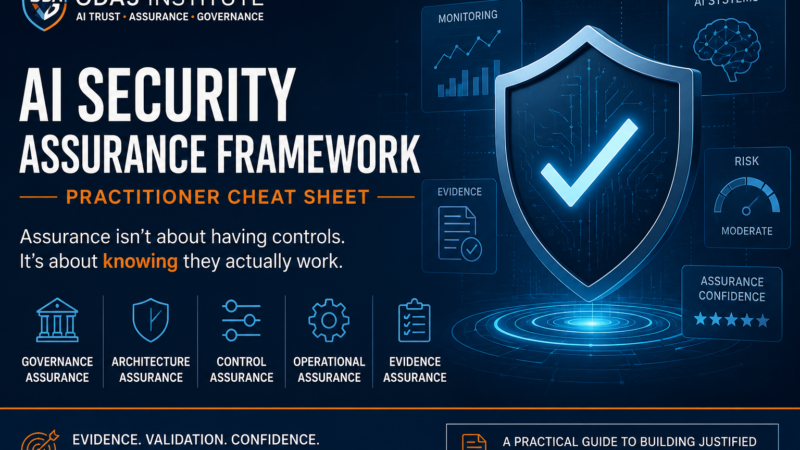
A structured way to connect governance claims, operating controls, evidence, and bounded conclusions.
Read publication →ODA3-2026-07-CHT-SEC-005
Placing controls at the right layer across model, retrieval, agent, tool, and enterprise boundaries.
Read publication →ODA3-2026-07-CHT-SEC-003
A structured, authorized and evidence-producing method for adversarial testing of AI systems.
Read publication →ODA3-2026-07-CHT-SEC-004
A routing matrix for distinguishing harmful system behaviour from adversarial compromise and overlap.
Read publication →ODA3-2026-07-CHT-SEC-002
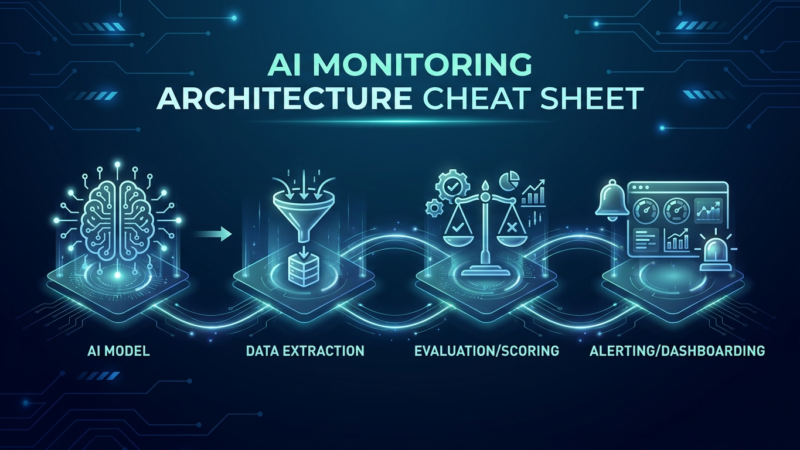
Monitoring model behaviour, retrieval, agent actions, tool use, and infrastructure as one evidence chain.
Read publication →ODA3-2026-07-CHT-SEC-001
A layered control model for reducing prompt-injection impact across AI applications, RAG and agents.
Read publication →ODA3-2026-07-TCR-SEC-004 / ODA3-2026-07-EXB-SEC-005
Q2 evidence indicates that material AI security impact is shifting from model outputs toward authorized actions.
Read publication →ODA3-2026-06-DP-009
ODA3 defensive publication establishing prior art for Dominant-Harm-Anchored Severity Scoring Engine for AI Incident Classification with.
Read publication →ODA3-2026-06-DP-010
ODA3 defensive publication establishing prior art for Cryptographic Hash-Based Incident Deduplication with Architecturally-Separated Acute and Chronic.
Read publication →