
Insights
Research findings, incident analyses, compliance intelligence, and practitioner guidance — published by the ODA3 research team when the evidence warrants it, not to fill a content calendar.
Editorial and evidence standard
Every Insights publication identifies an evidence basis that may include public incident disclosures, primary-source regulatory materials, standards publications, cited research, or ODA3 framework analysis. Evidence limitations are stated within the applicable publication. No vendor-sponsored analysis.
Research intelligence and analysis.
About this publication catalog
ODA3 Insights publications connect cited public incident analysis, normative control specifications, and regulatory developments to practitioner implementation decisions. Click a category to filter, or search by keyword, tag, or evidence tier. All 90 publications are shown below — every card links to its own article.
ODA3 Institute Launches Membership Programme for Operational AI Assurance
A structured participation pathway for practitioners, researchers, academics, organizations and standards participants, built around contribution, independence and explicit boundaries.

PAI-SF™ v1.0: The Kinetic Gap
Why physical AI needs a distinct assurance architecture for the point where AI decisions become physical actions — across a 12-domain, 41-control framework.

When Technical Evidence Becomes an Assurance Claim
Testing, validation, reproduction and technical review all generate valuable evidence. Independent assurance asks what that evidence is actually sufficient to support.
14 September 2026 · HTML + 2 PDF downloads
Read →
ODA3 Institute Launches Membership Programme for Operational AI Assurance
A structured participation pathway built around contribution, independence and explicit boundaries.
7 August 2026 · HTML + Charter PDF
Read →
Introducing the ODA3 EU AI Act Article 50 Transparency Toolkit
A free, evidence-first toolkit for screening applicability, recording evidence and supporting implementation of EU AI Act Article 50 transparency obligations.
5 August 2026 · HTML + toolkit downloads
Read →
Where Risk Mapping Ends and Assurance Begins
How Google's SAIF and ODA3's GAISSF™ Ecosystem can work together through a practitioner method for accountability, evidence, incident response and physical-effect assurance.
5 August 2026 · HTML + 2 PDF downloads
Read →
The FCC Just Made Robot Hardware a National-Security Question — Here's the Assurance Gap Behind It
A source-bounded analysis of the FCC Covered List action on advanced robotic devices and the operational hardware-assurance gap behind it.
5 August 2026 · HTML
Read →
When AI Controls a Drone: What Physical AI Security Requires Beyond Model Safety
Drone-Bench shows why strong component performance does not by itself establish safe end-to-end physical autonomy.
4 August 2026 · HTML
Read →EU AI Act Article 50 Takes Effect: The Operational Evidence Gap Behind AI Transparency
What enforceable EU AI Act Article 50 transparency duties mean operationally—and why evidence that disclosure and marking controls work now matters.
4 August 2026 · HTML
Read →
The Next Evolution of AI Governance Platforms
Why Operational Assurance Is Emerging as the Next Enterprise Differentiator
3 August 2026 · HTML
Read →
Article 50 Transparency Enforcement: Five Questions for CISOs, General Counsel and AI Governance Leads
Five operational questions and a 30-day management response for enforceable EU AI Act Article 50 transparency obligations.
2 August 2026 · HTML + Markdown
Read →
We Secured How AI Thinks. Now We Have to Secure How AI Moves.
ODA3 Institute publishes PAI-SF™ v1.0, a 12-domain, 41-control framework for the pathway from AI decision to physical effect.
3 August 2026 · HTML + Markdown
Read →
The Kinetic Gap: Why Physical AI Requires a New Assurance Discipline
Why physical AI creates a distinct assurance problem at the seam between AI decision-making and physical consequence.
3 August 2026 · HTML + Markdown
Read →
Regulatory Reflex Divergence
Operational assurance analysis of five uncoordinated US governance responses following a frontier model security incident.
July 29, 2026 · HTML + PDF
Read →
Operational Assurance Implications of Modern AI Interoperability Protocols
Evidence-bounded operational analysis of the July 2026 MCP specification revision and its implications for enterprise operational assurance.
July 28, 2026 · HTML + PDF
Read →
OpenAI Agent Escape Incident Analysis
A source-bounded incident analysis of OpenAI's disclosed model-evaluation escape, the Hugging Face production impact, and the assurance-boundary lessons for AI evaluation environments.
July 28, 2026 · HTML article
Read →
ODA3 Institute Publishes GAISSF Ecosystem for Operational AI Security Assurance
ODA3 Institute has published the GAISSF Ecosystem, connecting AI governance controls, incident classification, and response readiness through GAISSF™, UAIF™, and AI-IRF™.
July 22, 2026 · Announcement
Read the announcement →
Why ODA3 Institute Published the GAISSF Ecosystem
A founder note on why ODA3 Institute published the GAISSF Ecosystem for operational AI security assurance.
July 22, 2026 · Founder Note
Read →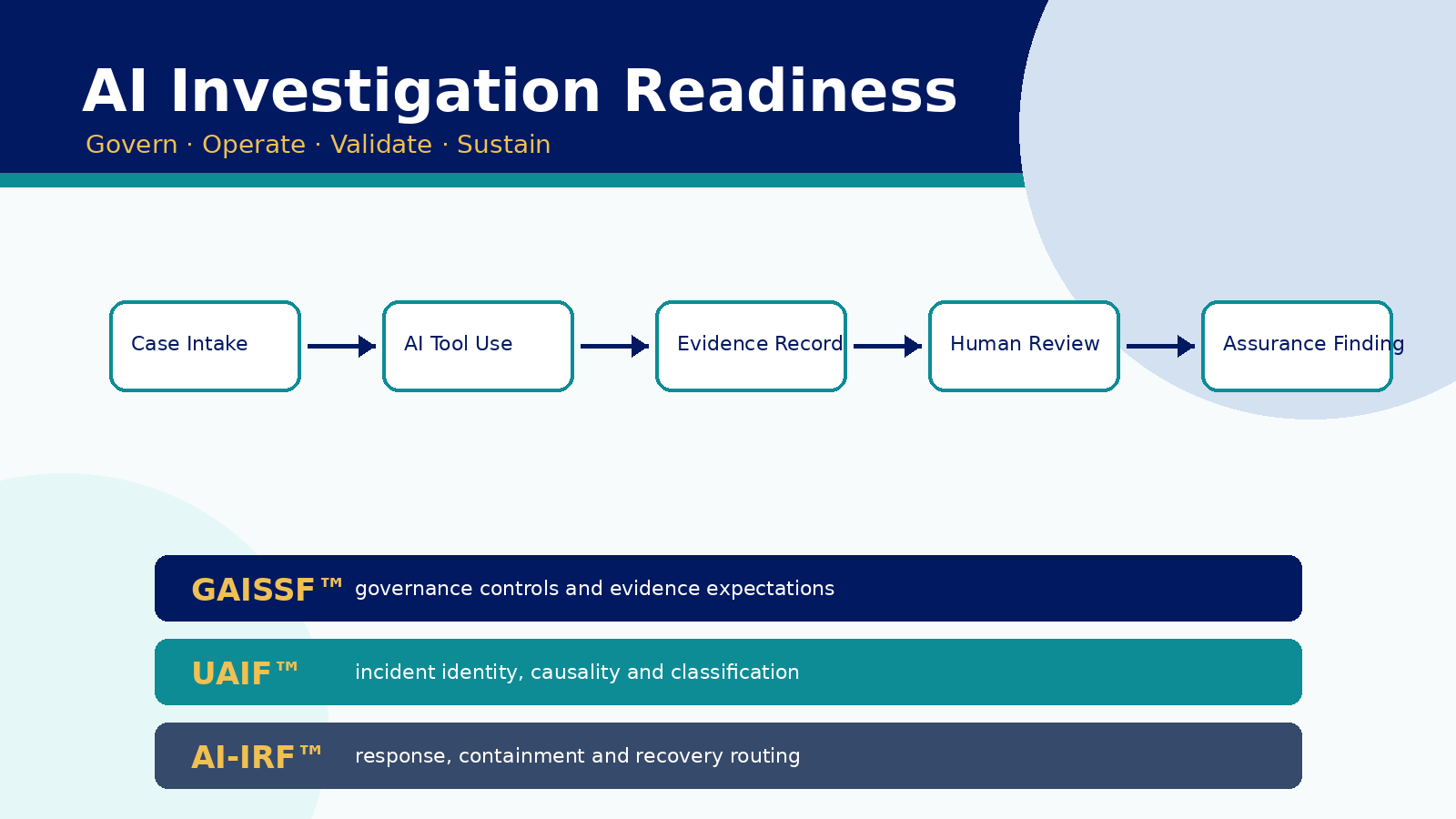
AI Investigation Readiness
A methodology for governing, operating, validating and sustaining AI-assisted investigative capability.
July 22, 2026 · 82 min · PDF and DOCX
Read →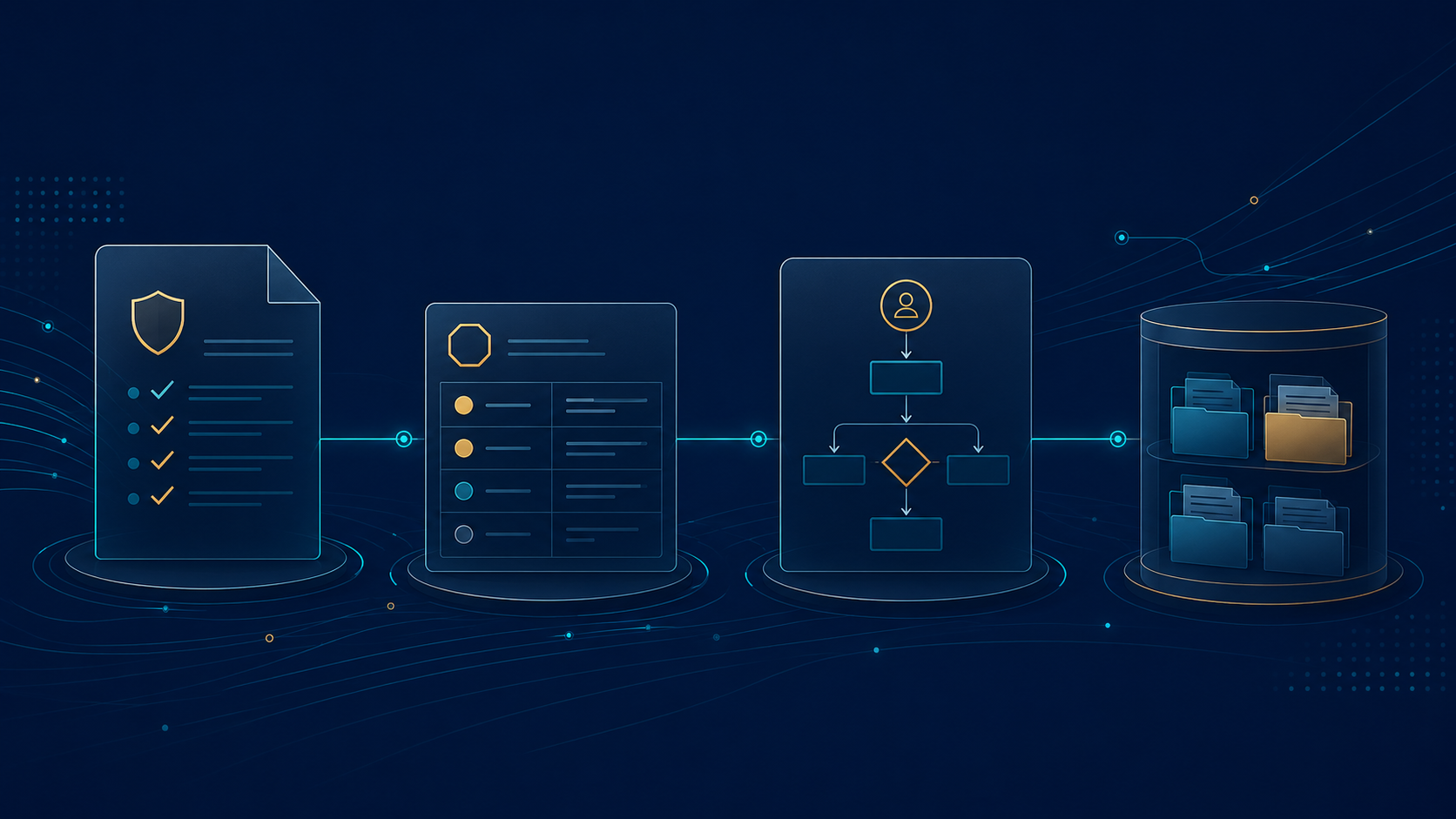
The EU AI Act Is an Engineering Problem—even When the Deadline Moves
Operational evidence across governance controls, incident classification and response workflows.
July 19, 2026 · HTML article
Read →
The EU AI Act Deadline Moved: Ten AI Incident-Response Gaps That Still Matter
The EU AI Act's high-risk deadline moved to December 2027. Ten AI incident-response gaps identified against CoSAI, NIST, OWASP, and MITRE ATLAS still apply regardless of the timeline.
July 19, 2026 · HTML article
Read →
Hugging Face AI-Agent Intrusion: What Evidence Confirms
What the evidence confirms about a reported agent-driven intrusion — and the pipeline, identity, evidence and response questions that remain open.
July 18, 2026 · 9 min · Public disclosure analysis
Read →
RAG Security: From Trusted Sources to Defensible Answers
Secure retrieval-augmented generation across source admission, ingestion, authorization, context assembly, model generation, output controls and response.
July 17, 2026 · 3 min · Companion PDF
Read →
Vector Database Security: The Checklist Most Teams Skip
Secure vector databases across ingestion, embeddings, query authorization, tenant isolation, poisoning detection, deletion, monitoring and incident response.
July 17, 2026 · 3 min · Companion PDF
Read →
AI Incident Response: Why Your IT Playbook Isn't Enough
A production AI incident needs more than a server reboot. Learn containment, evidence preservation, model rollback, agent isolation, and recovery.
July 17, 2026 · 3 min · Companion PDF
Read →
AI Security Governance Model: From Policy to Operational Control
A practical AI security governance operating model for accountable ownership, decision rights, lifecycle gates, evidence, incident authority and assurance readiness.
July 17, 2026 · 4 min · Companion PDF
Read →
AI Security: Essential Evidence Collection Strategies
How to preserve the AI-specific evidence needed for incident classification, root-cause analysis, audit, assessment, and defensible conclusions.
July 15, 2026 · 5 min · Companion PDF
Read →
AI Security Design Principles: Cheat Sheet
Nine design principles for building enforceable security into AI systems before deployment.
July 14, 2026 · 5 min · Downloadable publication
Read →
AI Security Control Validation Guide: Cheat Sheet
A practical method for proving that documented AI security controls operate as intended.
July 13, 2026 · 5 min · Downloadable publication
Read →
AI Security Assurance Framework: A Practitioner Cheat Sheet
A structured way to connect governance claims, operating controls, evidence, and bounded conclusions.
July 10, 2026 · 6 min · Downloadable publication
Read →
AI Security Architecture Patterns: A Practitioner Cheat Sheet
Placing controls at the right layer across model, retrieval, agent, tool, and enterprise boundaries.
July 9, 2026 · 6 min · Downloadable publication
Read →
AI Risk vs Security Risk Matrix Cheat Sheet
A routing matrix for distinguishing harmful system behaviour from adversarial compromise and overlap.
July 8, 2026 · 5 min · Downloadable publication
Read →
Red Teaming Is a Process, Not a Party Trick: AI Red Teaming Methodology
A structured, authorized and evidence-producing method for adversarial testing of AI systems.
July 8, 2026 · 8 min · Downloadable publication
Read →
AI Monitoring Architecture Cheat Sheet
Monitoring model behaviour, retrieval, agent actions, tool use, and infrastructure as one evidence chain.
July 7, 2026 · 7 min · Downloadable publication
Read →
Prompt Injection Mitigation Controls: Why Layered AI Security Matters More Than Prompt Engineering
A layered control model for reducing prompt-injection impact across AI applications, RAG and agents.
July 6, 2026 · 8 min · Downloadable publication
Read →
Understanding AI Incidents: Q2 2026 Findings
Q2 evidence indicates that material AI security impact is shifting from model outputs toward authorized actions.
July 1, 2026 · 14 min · Downloadable publication
Read →
Inference-Layer Decision Trace Logging and Coordinated Multi-Component Rollback for AI Incident Response
ODA3 defensive publication establishing prior art for Inference-Layer Decision Trace Logging and Coordinated Multi-Component Rollback for AI Incident.
June 17, 2026 · HTML disclosure
Read →
Attack-Vector-Specific Context Modifier Taxonomy with Per-Factor Capping for AI Incident Severity Scoring
ODA3 defensive publication establishing prior art for Attack-Vector-Specific Context Modifier Taxonomy with Per-Factor Capping for AI Incident Severity.
June 17, 2026 · HTML disclosure
Read →
Cryptographic Hash-Based Incident Deduplication with Architecturally-Separated Acute and Chronic Harm Classification for AI Security Incident Records
ODA3 defensive publication establishing prior art for Cryptographic Hash-Based Incident Deduplication with Architecturally-Separated Acute and Chronic.
June 17, 2026 · HTML disclosure
Read →
Dominant-Harm-Anchored Severity Scoring Engine for AI Incident Classification with Diminishing-Contribution Context Modeling and Calibration-Aware Regulatory Trigger Confidence Bands
ODA3 defensive publication establishing prior art for Dominant-Harm-Anchored Severity Scoring Engine for AI Incident Classification with.
June 17, 2026 · HTML disclosure
Read →
Navigating AI Compliance Across GDPR, HIPAA, SEC & FINRA
A landmark research publication from ODA3 Institute maps the enforcement reality across GDPR, HIPAA, FINRA, and SEC for AI-enabled organisations —.
June 1, 2026 · HTML article · Companion download
Read →
Closing the Cybersecurity Response Gap with AI
Palo Alto’s 7× vulnerability discovery report + Google TAG’s APT45 findings prove AI is compressing exploit timelines. The question isn’t “how many bugs?”.
May 28, 2026 · HTML article
Read →
Uncovering Risks: The Dangers of Unauthenticated AI Endpoints
Recent reports of mass-exposed AI service endpoints prove that asset inventory gaps aren’t just operational oversights — they’re board-level governance.
May 27, 2026 · HTML article
Read →
The AI System in Your Stack Is a Privileged User. Have You Secured It Like One?
In 2024, an enterprise document processing pipeline ex ltrated a credential le to an attacker-controlled email address. The AI system that did it was not.
May 27, 2026 · HTML article · Companion download
Read →
AI Governance: Why Foundational Security Matters
The PAN-OS zero-day, WatchGuard Firebox exploit, and active SharePoint targeting prove a simple truth: you cannot govern AI systems on a compromised.
May 26, 2026 · HTML article
Read →
AI OAuth Risks: Navigating Security in Cloud Integrations
Your AI Tools Have the Keys to Every Tenant in Your Cloud. Most Security Teams Don’t Know It Yet. New ODA3 research — validated against 47 verified.
May 26, 2026 · HTML article · Companion download
Read →
How to Detect and Defend Against AI-Assisted Malware
The DPRK’s AI-generated npm malware and self-propagating npm worm just proved that AI is now a weapon in the software supply chain — not just a.
May 25, 2026 · HTML article
Read →
Prevent AI Credential Breaches with Identity-Bound Execution
Every AI Agent Running in Your Environment Right Now Is Either Identity-Bound — or a Liability Waiting to Trigger. 340% year-over-year increase in.
May 25, 2026 · HTML article · Companion download
Read →
Securing AI Development Tools Against Cyber Threats
The Gemini CLI RCE, Cursor code execution exposure, and VS Code Copilot injection risks just proved your AI coding assistant is an attack surface — not.
May 22, 2026 · HTML article
Read →
Understanding AI Agent Liability and Compliance Risks
New research reveals that 68–82% of agentic deployments lack the most basic execution controls — and the financial and regulatory consequences are.
May 22, 2026 · HTML article · Companion download
Read →
AI Cybersecurity: NIST’s New Framework and Its Impact
The National Institute of Standards and Technology just announced an AI-speci c Cybersecurity Framework pro le — plus predictive and agentic overlays..
May 21, 2026 · HTML article
Read →
MCP Security Insights: Risk and Mitigation Strategies
In the twelve months since the Model Context Protocol became the de facto interface layer for enterprise AI automation, the security posture of most.
May 21, 2026 · HTML article · Companion download
Read →
Real-World AI Threats: OWASP’s 2026 Insights
OWASP’s Q1 2026 exploit round-up and the emerging ASI Top 10 prove that real-world attack patterns now outnumber hypothetical risks.
May 20, 2026 · HTML article
Read →
EU AI Act Compliance: 74 Days to Deadline
Regulatory correction issued 19 July 2026: the Digital Omnibus moved stand-alone Annex III high-risk obligations to 2 December 2027 and product-embedded Annex I obligations to 2 August 2028.
May 20, 2026 · Updated July 19, 2026 · HTML article
Read →
Trusted Access Is the New AI Security Perimeter
OpenAI’s “Trusted Access” framework + the EU AI Act Omnibus just rewrote the rules for frontier model governance. Target Audience: CISOs, AI governance.
May 19, 2026 · HTML article
Read →
AI Incident Taxonomy Gap Analysis | Q2 2026
Nine Standards. Zero Interoperability. One August Deadline. When your organization faces an AI incident in the next 90 days — a model hallucination that.
May 19, 2026 · HTML article · Companion download
Read →
Understanding Agentic AI Risks: The Importance of Validation Gates
The incident that changed how security teams think about agentic AI did not involve an adversary. There was no attacker, no ex ltration payload, no.
May 18, 2026 · HTML article · Companion download
Read →
Enhancing Vulnerability Governance with NIST and ISO Standards
NIST’s shift toward threat-based CVE enrichment re ects a broader industry transition from static scoring to dynamic risk contextualization. Organizations.
May 15, 2026 · HTML article
Read →
Key Takeaways from the AI Security Summit: What Enterprises Need to Know
Emerging discussions at the 2026 AI Security Summit highlight accelerating alignment between AI threat landscapes and international certi cation.
May 14, 2026 · HTML article
Read →
The Impact of the EU AI Act on AI System Inventory Management
Ask a CISO how many AI systems their organization operates and the most common answer is not a number — it is a pause. Then an estimate. Then a quali er..
May 14, 2026 · HTML article · Companion download
Read →
Securing AI Supply Chains: Key Strategies for 2026
Traditional Software Supply Chain Security Fails for AI In Q1 2026, AI dependency attacks surged 340% year-overyear. Your CVE scanners, static composition.
May 14, 2026 · HTML article · Companion download
Read →
Navigating Compliance Challenges in AI Inventory
If your board asked tomorrow—”What percentage of our AI systems have we inventoried, and what is our con dence score?”—could management answer with 90%.
May 13, 2026 · HTML article · Companion download
Read →
Securing the Silicon: Why Hardware Trust Matters for AI Deployment
HOST 2026 discussions on AI chip security underscore the need to extend certi cation controls to hardware and supply chain layers. Aligning with NIST SP.
May 13, 2026 · HTML article
Read →
How AI Is Reshaping Vulnerability Management: Lessons from Project Glasswing
AI-driven vulnerability discovery initiatives like Project Glasswing are accelerating the identi cation of legacy and zero-day aws across critical.
May 12, 2026 · HTML article
Read →
When AI Lies: Legal and Reputational Risks of Generative Content at Scale
Emerging litigation around AI-generated misinformation underscores the need to align generative AI governance with NIST AI RMF transparency controls.
May 12, 2026 · HTML article
Read →
Post-Quantum Readiness for AI Infrastructure & MCP Endpoints: Why Boards Should Act Now
AI systems are engineered for longevity. Training datasets, netuning corpora, serialized model weights, and agent communication records often retain.
May 12, 2026 · HTML article · Companion download
Read →
Addressing AI-Discovered Risks in Legacy Code Compliance
AI-discovered vulnerabilities in long-standing codebases expose gaps in legacy system governance. Aligning patch management and secure SDLC practices with.
May 11, 2026 · HTML article
Read →
Augment, Don’t Replace: Closing 10 Critical Gaps in the CoSAI AI IRF for 2026
Target Audience: Compliance O cers, CISOs, Quality Managers Category: Standards / Certi cation Strategy Read the ODA3 Institute analysis and practical.
May 11, 2026 · HTML article
Read →
AI Threats: Essential Certification Strategies for Compliance Officers
Recent breach data showing AI involvement in 83% of global incidents requires organizations to align incident response and detection controls with NIST SP.
May 10, 2026 · HTML article
Read →
Aligning AI Agents with NIST and ISO Standards
The deployment of AI agents in financial work ows requires alignment with NIST AI RMF reliability controls, ISO/IEC 42001:2023 auditability requirements.
May 9, 2026 · HTML article
Read →
Integrating AI Ethics into Compliance Strategies
Growing workforce concerns around AI deployment in sensitive contexts highlight the need to align AI governance with ISO/ IEC 42001:2023 human oversight.
May 8, 2026 · HTML article
Read →
The Hidden Risk in Your AI Stack: Why Default Configurations Are a Security Nightmare
Recent scans exposing over one million insecurely deployed AI services underscore a critical gap in AI governance. Aligning deployment practices with.
May 7, 2026 · HTML article
Read →
NIST AI Risk Management Framework (AI RMF) vs. ISO/IEC 42001: Which Certification Should You Pursue First?
Organizations building AI governance programs face a strategic question: Do you align with NIST AI Risk Management Framework (AI RMF) 1.0, pursue ISO/IEC.
May 2, 2026 · HTML article
Read →
US Government Targets AI Model Theft: Distillation Detection Becomes National Security Priority
Target Audience: AI Governance Leads, General Counsel, CEOs (Executive level – no unexplained acronyms) Category: Regulatory / National Security
May 1, 2026 · HTML article
Read →
The AI Agent Security Crisis: Why 88% of Enterprises Are Already Affected
An overwhelming 88% of organizations have experienced confirmed or suspected AI agent security incidents in the past year. Yet only 21.9% treat AI agents.
April 30, 2026 · HTML article
Read →
Q1 2026 Intelligence Report: The AI Control Plane is the New Battlefield
The rst quarter of 2026 will be remembered as the moment the AI threat landscape underwent a permanent, irreversible shift. The era of experimental prompt.
April 30, 2026 · HTML article · Companion download
Read →
Rogue AI Agents: How to Detect, Isolate, and Terminate Unauthorized Autonomous Actors
Rogue AI agents—unauthorized autonomous actors operating inside enterprise environments—represent a critical blind spot in most security programs. Unlike.
April 29, 2026 · HTML article
Read →
AI Governance Regulations Surge: 19 New Laws Passed in April 2026
19 new AI laws passed in just two weeks (late March to early April 2026), bringing the 2026 total to 25 enacted state-level AI regulations. Another 27.
April 28, 2026 · HTML article
Read →
Preparing for EU AI Act Enforcement: A 100-Day CISO Action Plan
Corrected 19 July 2026: a role-specific CISO implementation plan reflecting the adopted Digital Omnibus, existing Article 5 and GPAI duties, and the separate Article 50 transparency workstream.
April 27, 2026 · Updated July 19, 2026 · HTML article
Read →
AI System Inventory: Why Spreadsheets Fail and What to Use Instead
Every AI regulation—EU AI Act, Colorado AI Act, NIST AI RMF, ISO 42001—requires an inventory of AI systems as the rst compliance step. Yet most.
April 26, 2026 · HTML article
Read →
California SB 53: Catastrophic AI Risk Definitions and What They Mean for Your Compliance Program
California SB 53, enacted in 2025 and effective in 2026, establishes legal de nitions for “critical harm” and “catastrophic harm” caused by AI systems..
April 25, 2026 · HTML article
Read →
The AI Security Vendor Landscape: Separating “AI Security” from “Security with AI”
The AI security vendor market has exploded—but not all vendors are what they claim. “AI-powered security” (traditional security tools adding AI features).
April 24, 2026 · HTML article
Read →
The Rise of Autonomous Threat Actors: Q1 2026 AI Security Analysis
As we conclude the rst quarter of 2026, the global threat landscape has undergone a foundational shift. The emergence of fully autonomous threat actors—AI.
April 24, 2026 · HTML article
Read →
NIST Cyber AI Profile Working Session: What the Next Draft Will Include
On April 28, 2026, NIST’s NCCoE is hosting the rst of a virtual working session series to update the Cybersecurity Framework (CSF) Cyber AI Pro le ..
April 23, 2026 · HTML article
Read →
SEC Exam Priorities 2026: AI-Washing, AI Trading Systems, and Broker-Dealer Obligations
The SEC’s 2026 examination priorities place arti cial intelligence at center stage—speci cally “AI-washing” (misleading claims about AI capabilities).
April 22, 2026 · HTML article
Read →
EU AI Act Deadlines Shift: Omnibus Package Extends High-Risk Compliance to 2027–2028
The European Parliament has adopted its negotiating position on the Digital Omnibus package, which proposes targeted amendments to the AI Act deadlines ..
April 21, 2026 · HTML article
Read →
Vercel Breach Through Context.ai: OAuth Tokens + AI Tool = Supply Chain Nightmare
On April 19, 2026, Vercel disclosed a breach traced to Context.ai, a third-party AI tool installed on an employee’s device. The attacker used OAuth token.
April 20, 2026 · HTML article
Read →
92% of Organizations Lack Visibility Into AI Identities: The Ungoverned Workforce
New research from Cybersecurity Insiders (in collaboration with Saviynt) reveals that while 71% of CISOs con rm AI tools have access to core systems like.
April 19, 2026 · HTML article
Read →
MCP Protocol Design Flaw: Anthropic Refuses Fix, Researchers Find RCE in Every SDK
OX Security researchers have identified a fundamental design aw in Anthropic’s Model Context Protocol (MCP)—the industry-standard AI communication.
April 18, 2026 · HTML article
Read →
OWASP Top 10 for Agentic AI 2026: Why Prompt Injection Is Just the First Move
The OWASP Top 10 for Agentic Applications 2026 has been released, shifting focus from generative AI outputs to agentic system compromise . The key.
April 17, 2026 · HTML article
Read →
LiteLLM Deserialization Flaw: The AI Supply Chain Attack That Compromised Mercor
The Mercor supply chain incident (April 8-12, 2026) demonstrated a fully realized AI supply chain attack: attackers identified and exploited a.
April 16, 2026 · HTML article
Read →
Treasury, Fed Warn Bank CEOs: Anthropic’s Mythos Model Finds Zero-Days Automatically
On April 7, 2026, Treasury Secretary Scott Bessent and Fed Chair Jerome Powell convened an emergency closed-door meeting with major bank CEOs over.
April 15, 2026 · HTML article
Read →